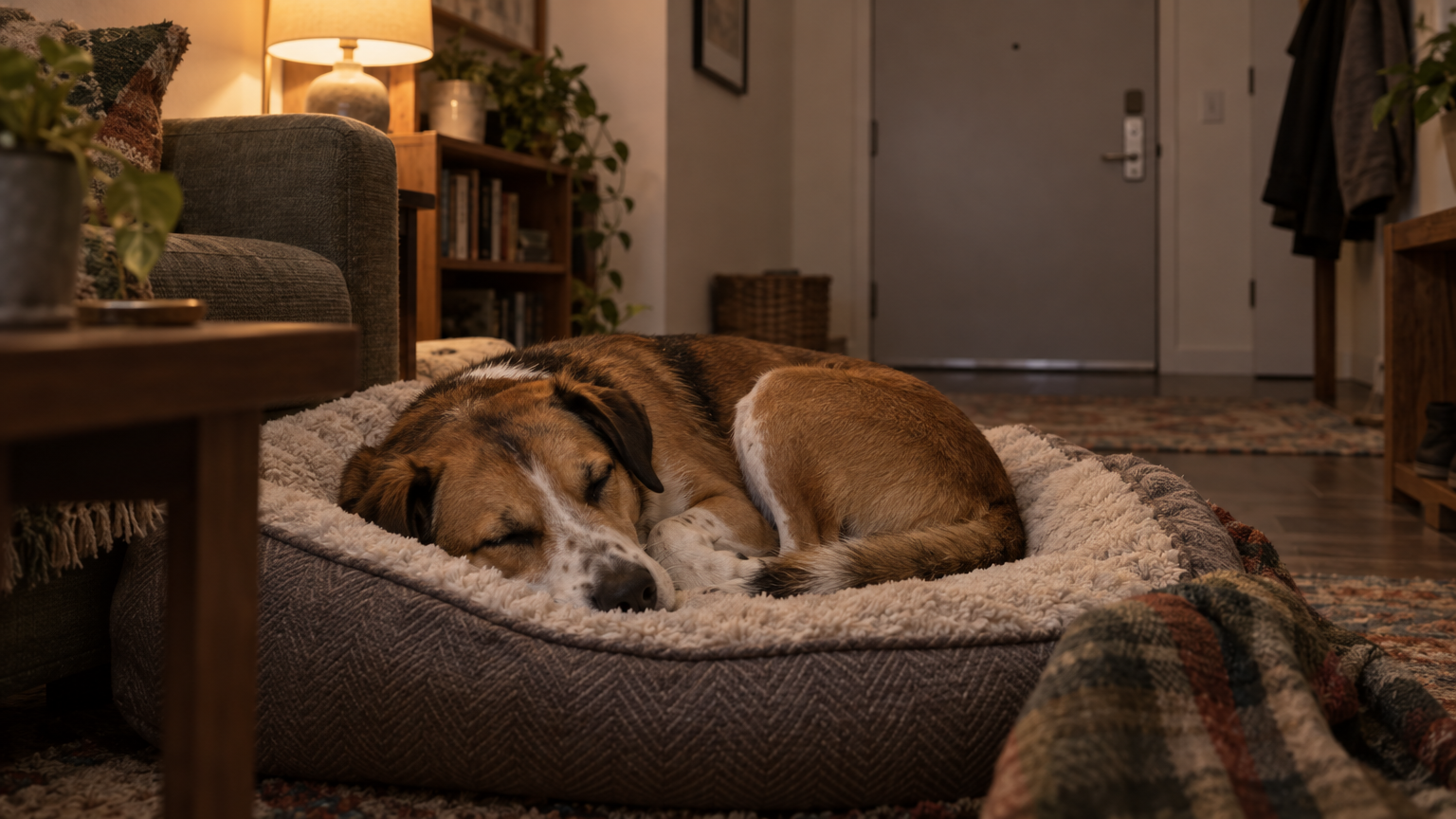
A 30-day routine for apartment rescue dogs
Calm Your Apartment Rescue Dog During Hallway Noises Without Frantic Shouting.
Discover a simple 30-day routine to replace corridor barking with quiet composure, protect your lease, and relax in your home even when neighbors make unpredictable sounds.
Now $27, down from $47
- Humane, reward-based methods
- Secure checkout
- 30-day guarantee
The core problem
The Auditory Startle Cascade
When sudden footsteps or elevator chimes echo outside your door, your dog does not ignore you on purpose. The noise triggers an automatic survival reflex that floods their system with stress and shuts down their ability to process cues or eat food.
You end up living on constant high alert, bracing for the next door slam and dreading an email from your landlord. Trying to correct a dog in full panic mode fails because cognitive learning has turned off completely.
This constant strain is not your fault, and your dog is not broken. You were simply handed generic suburban advice that ignores the intense acoustics of shared apartment hallways.
The opportunity
The Predictable Startle Protocol
You do not need silent neighbors or a private yard to build a peaceful home. Our system creates a designated home base and uses simple sound logs, teaching your dog where to go before loud hallway noises happen.
Instead of shouting over loud barking, you rehearse simple response cues during ordinary quiet hours. This approach insulates your dog from sensory shock and gives both of you an automatic, step-by-step plan for common building sounds.
Imagine sitting on your couch in the evening without a racing heart every time someone walks past your door. You finally feel at ease in your building, knowing your dog is relaxed and secure.
Who this is for
First-Time Apartment Adopters
You adopted a rescue dog into a busy apartment building and need a reliable routine to stop reactive hallway barking quickly.
Stressed Urban Renters
You worry about landlord warnings and neighbor complaints every time footsteps pass your entryway, leaving you on edge inside your home.
Work-From-Home Pet Parents
You need predictable quiet during daily work calls and want simple steps that do not require hours of complex training drills.
Replace Hallway Tension With a Predictable Daily Routine
Stop Hallway Dread
Know exactly what to do when doors slam or footsteps pass, so you can relax in your living room without bracing for every sound.
Clear Action Signals
Use simple signs like treat willingness and relaxed posture to know right away whether to continue practice, reset distance, or pause.
A Safe Home Base
Set up a designated resting spot away from entry doors that your dog seeks out naturally before sudden hallway noises happen.
Predictable Noise Tracking
Map your building routine with an easy log, turning chaotic corridor sounds into manageable moments you can handle with confidence.
Real Relief for Apartment Rescue Dog Owners
“Footsteps used to trigger frantic barking every evening. Now my rescue heads straight to his bed and settles down within seconds.”
“We stopped walking on eggshells in our own home. Having a clear plan gave us our quiet evenings back.”
Our story
Why We Built the Calm Corridor System
I remember sitting on my living room floor, stomach in knots every time the heavy elevator door banged shut down the hall. My newly adopted rescue dog would sprint toward the doorway, barking at every set of footsteps. I tried everything the generic internet videos told me to do. I shushed him. I tried shouting commands over his barking. I even shoved treats in his face while he was alarmed. None of it worked. Most dog training advice was made for quiet suburban houses with private yards, not for active third-floor apartment hallways. The breaking point arrived when a neighbor knocked on my door to complain about the noise. I felt sick with worry that property management would flag our lease, and I wondered if adopting a rescue dog had been a mistake.
That evening, I realized a simple truth. You cannot teach a dog anything while an alarm is already blaring in his head. The issue was not a stubborn dog. Sudden building sounds triggered an automatic survival reflex that blocked all learning. So I stopped waiting for corridor noise to happen. Instead, I set up a calm home base away from the door during quiet hours. I logged building sounds to find predictable patterns, and we practiced simple response cues when the hallway was silent. When the next heavy door slammed, my dog did not run to the door. He turned, checked in with me, and walked straight to his bed. Today, that exact step-by-step routine helps apartment owners handle building noise with steady confidence, without moving or expecting silent neighbors.
How it works
Four steps, five to ten minutes a day
Step 1
Log Your Building Noise
Track recurring hallway sounds using our simple daily sheet. You will spot predictable patterns quickly. This keeps you calm and removes daily guesswork.
Step 2
Set Up the Home Base
Create a comfortable resting spot away from your front door. Your dog learns this area during quiet hours. It serves as a dependable anchor when hallway noise starts.
Step 3
Practice Simple Responses
Rehearse basic cues when your hallway is calm and quiet. Doing this wires steady habits before sudden noises happen. Your dog learns to look to you instead of rushing the door.
Step 4
Run Safe Sound Drills
Expose your dog to hallway sounds at very low volumes. Use clear signals to pause or reset whenever needed. This builds quiet confidence step by step.
The investment
One guide. One simple payment.
The price is now $27, down from $47, for the current adoption cohort. Build your calm routine right away.
The Calm Corridor Digital Guide
$27$47one-time payment
Now $27, down from $47
- The complete Calm Corridor digital guide
- Step-by-step sound exposure routines
- Clear reset rules for alert barking
- 30-day calm routine guarantee
Secure checkout. Instant digital access.
Our guarantee
30-Day Calm Routine Guarantee. Try It with Zero Risk.
Take a full 30 days to review the guide, set up your dog's home base, and practice the daily steps. Use the sound log and test the simple cues during normal building hours.
If you do not feel more prepared when hallway sounds happen, send an email. You will get every penny back with no hassle and no hard feelings. All the risk stays on us.
Life inside a quiet home
Picture this.
It is 8:00 PM on a Tuesday. You are sitting on your couch, reading or watching a movie. Outside your front door, a heavy fire door thuds shut. Heavy footsteps echo down the communal hallway, followed by the familiar chime of the elevator.
Your stomach does not drop. You do not freeze, waiting for the sudden explosion of barking.
Instead, your dog looks up from their bed, takes a slow breath, and stays settled. You both know the routine. There is no frantic shouting. There is no desperate scrambling for treats while your heart races. You simply continue enjoying your evening in peace.
Now think about the other path.
If you change nothing today, tomorrow night will look exactly like tonight. You will spend another evening on high alert, bracing for every neighbor who walks down the hall. You will keep feeling that pit of dread in your stomach, wondering if the next sharp bark will trigger an angry email from your landlord or a confrontation at your door.
Living in an apartment should not feel like an endless patrol shift. You do not need to wait until you can buy a house with a private yard to find peace. You only need a prepared routine.
Final concerns
Common questions before you start
Here are honest answers to the final questions most apartment owners have before starting.
My building is constantly loud with foot traffic. Will this still work for us?
Yes. This system does not rely on having quiet neighbors or empty corridors. In fact, predictable hallway foot traffic gives you real patterns you can log and work with. You will learn how to break down the noise into manageable steps, starting inside your home during quiet hours so your dog learns how to stay anchored before the hallway gets busy.
Will giving treats near hallway noises accidentally reward the barking?
No. Barking at sudden building sounds is an involuntary stress reaction, not a calculated trick to get food. When you use treats strategically, you are checking your dog's nervous system and changing their emotional response to the sound. Our guide gives you a clear Continue, Reset, or Pause tool so you always know when to step back and lower the pressure.
I have a busy schedule. How much time does this take each day?
You do not need hours of free time. The exercises take about five to ten minutes a day during quiet moments you already share with your dog. You are simply practicing basic response cues while things are calm, so your dog knows where to go when real sounds happen later.
Can an older rescue dog with strong sound sensitivity really learn this?
Yes. Dogs of any age can learn dependable routines. We do not ask your dog to ignore reality or become completely silent overnight. The goal is progress over perfection. By giving your dog a designated home base and a reliable cue, you replace chaos with clear, repeatable steps your dog can actually follow.
What happens if I try the method and it does not help my situation?
You are completely covered by our 30-Day Calm Routine Guarantee. Read the guide, set up your dog's resting spot, and try the simple cues for up to 30 days. If you do not have a clear, proactive plan for handling hallway noises, send a quick email and you will get a full refund.
Frequently asked questions
Questions
Will this work if my apartment hallway is constantly busy?
Yes. You cannot control your neighbors, but you can build a predictable routine. The guide teaches your dog how to settle even when footsteps and elevator chimes happen every day.
Does this require hours of practice every day?
No. You do not need hours of free time. You will practice simple cues during calm moments for five to ten minutes a day, fitting directly into your normal schedule.
Will feeding treats while my dog is alert accidentally reward barking?
No. Involuntary stress reactions are not learned tricks. Strategic food delivery addresses your dog’s emotional state, and treat willingness tells you exactly how close your dog is to threshold.
Do I need a private yard or quiet suburban home for this to work?
Not at all. This entire system was designed specifically for multi-story apartment buildings, shared corridors, heavy fire doors, and close neighbors. No private yard is needed.
What if my dog will not stop barking completely?
The goal is manageable daily routines, not absolute silence. You will learn how to lower arousal, avoid panic, and help your dog recover quickly when sudden noises happen.
What is included with my purchase?
You get instant digital access to the complete Calm Corridor guide, including the step-by-step sound exposure routines and the clear reset rules for alert barking.
How much does the program cost?
The guide is a single one-time payment of $27, down from the regular $47 price. There are no recurring fees.
How does the 30-day guarantee work?
Try the exercises and set up your home base for up to 30 days. If you do not feel more prepared during hallway noise, email us for a full, prompt refund.